The world is changing faster than ever before.
Artificial intelligence writes texts.
Robots work in production.
Algorithms decide about loans.
Digital technologies control transportation, medicine, and communication.
The question is no longer, whether education will change.
The question is, whether it changes fast enough.
The future of education rests on two pillars: STEM and AI.
In this article we will explain:
what STEM education means
what role does AI play in education
why children will need new skills
How schools can respond
How experiential centers support STEM and AI thinking
What is STEM education?
STEM is an abbreviation for:
Science (science)
Technology (technologies)
Engineering (engineering)
Mathematics
STEM education does not mean more mathematics.
It means linking theory with practice.
Children do not learn isolated facts.
They learn to solve problems.
Why is STEM the foundation of the future of education?
According to global trends:
Technological professions grow faster than others
Digital skills are necessary in most professions
Analytical thinking is a key skill
STEM education develops:
✔ logical thinking
✔️ analytics
✔️ problem solving
✔️ team collaboration
✔️ creativity
These are skills that AI cannot replace.
Artificial intelligence in education – a threat or an opportunity?
Artificial intelligence in school is not the future.
There is presence.
AI can:
generate texts
explaining the material
analyze the data
create personalized tests
So the question is:
👉 Will children use AI passively or will they understand it actively?
The future of education must teach children:
How AI works
what are its limits
How to use it critically
STEM and AI – why do they belong together?
STEM without AI is incomplete.
AI without STEM is misunderstood.
If the child understands:
mathematics → understands algorithms
logic → understands programming
leads → understands modeling
engineering → understands systemic thinking
Then he also understands artificial intelligence.
How is modern education changing?
Classic model:
Teacher → explanation → student → test
Modern model:
Problem → experiment → discussion → solution → reflection
STEM and AI support the latter model.
Future Skills
When we talk about the future of education, we have to talk about skills:
Critical thinking
Digital literacy
Analytical thinking
Solving complex problems
Adaptability
Creativity
STEM education is the most natural way to develop them.
Why do children need an experience in STEM and AI?


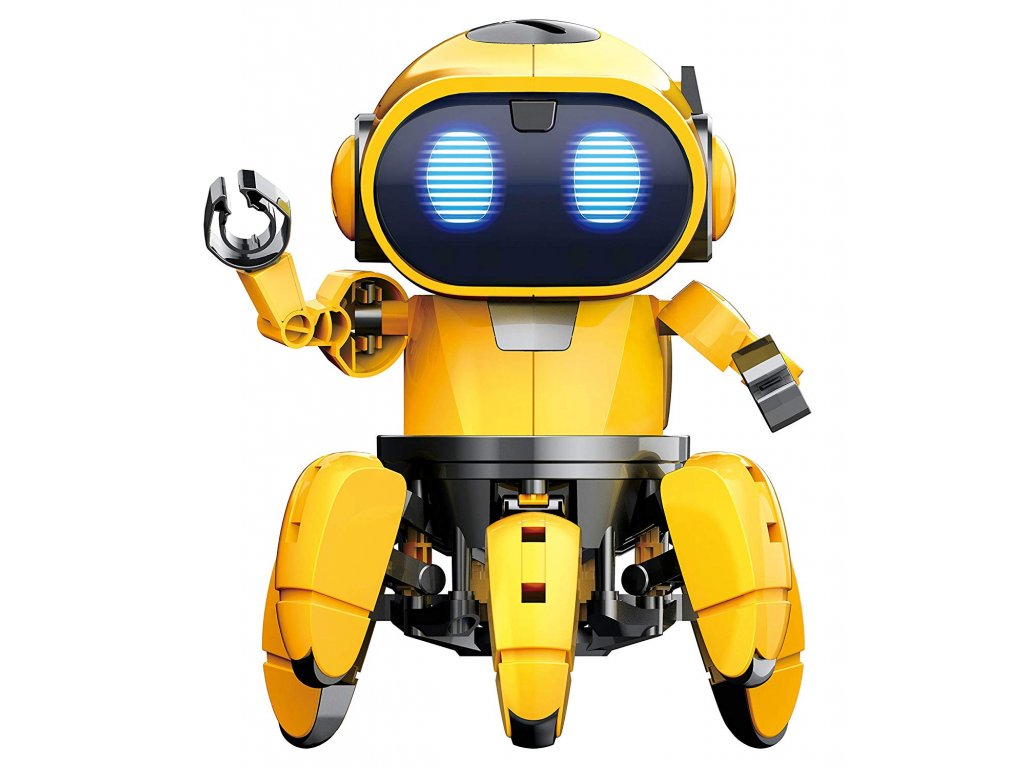
In an environment like Atlantis Science Center Levice STEM is not taught as a theory.
Children:
They are experimenting
testing hypotheses
they solve problems
they discuss the results
That is exactly the principle of STEM and AI thinking.
When a child explores:
„Why did this happen?“
„What will change if I adjust the parameter?“
He learns to think like a scientist.
AI in education: How to teach it correctly?
Not the goal:
„Use AI and write a report.“
The correct goal:
analyze the AI response
over resources
compare the outputs
find the errors
AI is meant to become a tool.
Not with replacement thinking.
The future of schools: a hybrid model
The future of education will combine:
classical teaching
digital tools
project-based learning
STEM workshops
AI assistance
The school is changing from a place of knowledge transmission
to the place of developing competencies.
How can schools implement STEM and AI?
1️⃣ Project-based teaching
Let the students solve a real problem.
For example:
„Design the ecological class of the future.“
2️⃣ Robotics and programming
The basics of algorithmic thinking are already taught in elementary school.
3️⃣ Experimental workshops
Practical experience has a higher memory recall rate.
4️⃣ Cooperation with interactive centers
External STEM programs bring:
new environment
higher motivation
an experience
better concentration
Why is STEM and AI an investment in a child's future?
Children who understand technology:
they are more competitive
They adapt better
They can create, not just consume
The future of work will require:
interdisciplinary thinking
the ability to work with data
Understanding systems
STEM and AI education is preparation for reality.
Frequently asked questions (FAQ)
Is STEM only for technically gifted children?
No. STEM develops universal skills.
Should AI be taught in elementary school?
Yes – at least the principles of operation and critical use.
Can a school trip support STEM education?
Yes – if it is based on interactivity, experimentation and discussion.
Summary: The future of education = STEM + AI
The world is becoming digitalized.
Technologies are penetrating every area.
Children need to understand the systems, not just the facts.
STEM develops analytics.
AI requires critical thinking.
Experience is the most effective way of learning.
The future of education will not be about memorization.
It will be about thinking, creating, and solving problems.
And an environment where children learn to experiment, analyze, and collaborate – such as Atlantis Science Center Levice – creates a natural bridge between the school and the future.
About the Author